Act I
“The strap was loose before I touched it.”
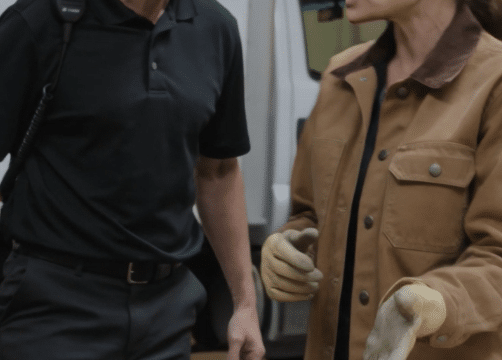
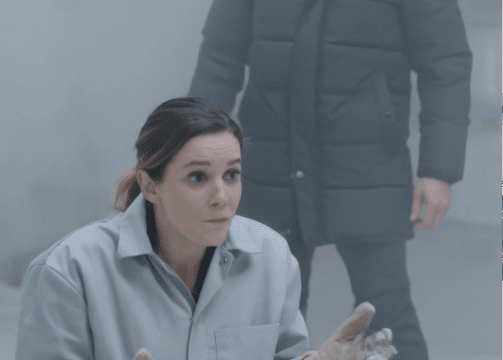
Margaret Ellis stood beside the coal cart, one soot-covered hand pointing at the frayed strap and the other trembling near the fallen sack. Black dust coated her old work shirt, settled into the lines around her tired eyes, and clung to the cloth wrapped around her neck. She had been working since before sunrise, and the last thing she needed was another reason for the yard boss to take money from her.
But Bradley Knox was already looking at her as though she had committed a crime.
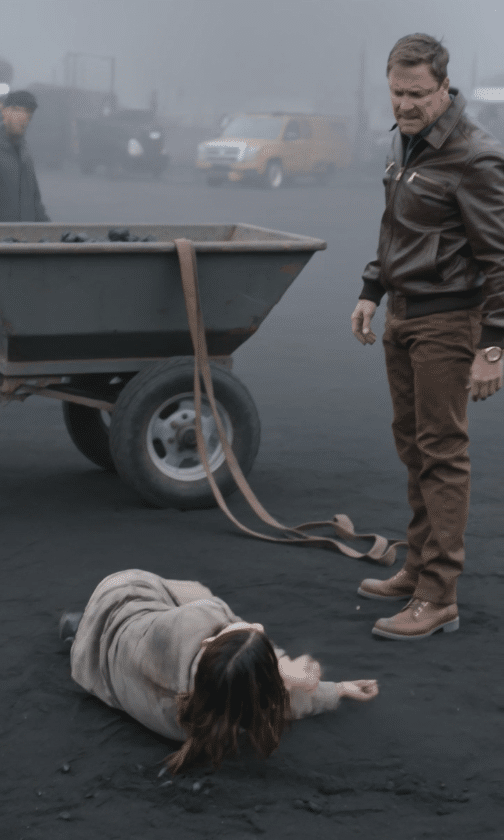
He stood in polished new boots that had barely touched a day’s honest labor, his brown leather jacket clean enough to make him look like a visitor in the filthy yard he claimed to control. A gold watch gleamed at his wrist whenever he moved his hand. He glanced at the spilled coal, then at Margaret, and finally at the workers watching from behind their carts.
He wanted an audience.
“Trash. Pay for it with your shift.”
Margaret blinked, trying to understand whether he meant her entire day’s wages. She had three children at home, a refrigerator that was nearly empty, and a utility bill folded inside her coat with a red notice stamped across the top. One shift’s pay was not a small thing to her. It was dinner, bus fare, and the difference between keeping the lights on and explaining to her youngest why the house had gone dark.
“The strap was already coming apart,” she tried to explain, keeping her voice low. “I can get another sack loaded. Just check the buckle.”
She pointed to the cart again.
That small gesture was enough.
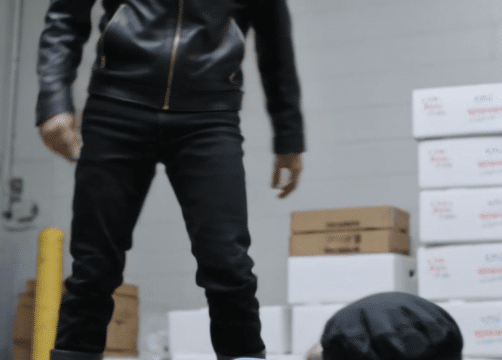
Bradley stepped into the black dust and drove a hard kick into her chest. Margaret was knocked backward beside the fallen sack, the breath leaving her in a shocked gasp. Her forearm scraped against the gritty ground as she tried to catch herself, leaving a thin, pale trace of blood beneath the coal dust.
For one suspended second, nobody moved.
Then Bradley kicked her twice more, once in the back and once in the side, as she curled inward and covered her face against the rising dust. The workers recoiled. One man pressed a hand over his mouth. Another took two steps backward, staring at the ground as though looking away might somehow absolve him.
Margaret struggled to draw a full breath.
Bradley stood over her, adjusting the cuff of his jacket as if the interruption had been nothing more than a minor inconvenience. His gold watch caught the gray daylight. The fallen sack lay beside her, split open just enough to spill black coal across the dirt.
“Mothers work cheaper when they’re scared.”
He said it without raising his voice.
That was what made the words worse. There was no burst of anger left in them, no loss of control he might later regret. Bradley spoke with the casual certainty of a man who had turned other people’s desperation into a business model.
Margaret looked up at him, one arm pressed against her chest, her face streaked with dust. Behind him, the workers remained frozen.
Then a black SUV came tearing through the entrance, brakes shrieking against the gravel.
The driver’s door swung open.
And the man who stepped out was the last person Bradley expected to see.
Act II
To understand why Margaret had been willing to endure Bradley Knox’s cruelty, it was necessary to understand what the coal yard meant to her.
Three years earlier, her husband, Daniel, had died after a long illness that drained the family’s savings one hospital bill at a time. He had worked wherever he could find steady hours, and he had always promised Margaret that if they could keep their heads above water long enough, their children would have choices he and she had never possessed.
After he died, the promises became hers to keep.
Margaret took every shift she could get. She cleaned offices before dawn, sorted coal sacks during the day, and occasionally accepted weekend work unloading trucks. Her eldest daughter, Hannah, had begun community college while working part-time at a diner. Her twelve-year-old son, Michael, had learned to make simple dinners without being asked. The youngest, Ellie, still left little drawings beside Margaret’s bed, each one featuring a house with a bright yellow sun above it.
Margaret kept those drawings in a kitchen drawer alongside unpaid bills.
She rarely complained about the coal dust. It washed out eventually, though never completely from the cuffs of her shirts. She rarely complained about the aching in her shoulders, either. Pain could be endured, she told herself. A missed paycheck was harder to repair.
Bradley knew exactly what people like Margaret were afraid of losing.
He had been appointed yard supervisor eighteen months earlier, after the company began expanding its regional distribution operation. His official responsibilities were ordinary enough: oversee loading schedules, record damaged stock, maintain equipment reports, and make sure workers followed safety procedures.
But Bradley had discovered that the job came with something more valuable than a title.
It gave him control over the paperwork.
He decided which damaged sacks were charged against a worker’s wages. He recommended who received overtime and who was sent home early. He could mark a person as unreliable, careless, or difficult, and in a town where industrial work was scarce, those labels traveled faster than the truth.
At first, his punishments were small.
A missing hour here. A deduction there. An extra shift assigned to someone who could not afford to refuse. When workers questioned the numbers, Bradley reminded them that dozens of people would gladly take their places.
He wore his gold watch where everyone could see it, turning time into a symbol of his authority. His new boots became another reminder: he could afford clean things because other people spent their days covered in grime.
The yard’s owner, Thomas Whitmore, rarely appeared in person. The business had grown beyond the small operation his father once ran, and Thomas spent much of his time handling suppliers, transportation contracts, and regional expansion. He had entrusted daily management to a small group of supervisors and expected the yard to run without his constant intervention.
That trust was about to become his most expensive mistake.
Margaret had noticed irregularities long before the sack fell.
Workers were being charged for torn packaging that had arrived damaged on delivery. Several people had complained that their recorded hours did not match the time they spent loading trucks. Safety straps were reused long after their stitching began to fail, even though replacement requests had supposedly been approved.
Whenever someone raised a concern, Bradley had an answer.
The strap was fine. The worker was careless. The numbers were correct. The company was losing money, and everyone needed to sacrifice.
Margaret had once found a replacement request for the very strap that failed that morning. It had been clipped to a clipboard in the maintenance shed, marked urgent and signed by a technician. Two days later, she saw the same strap back on the cart.
She remembered because she had nearly caught her sleeve on its frayed edge.
She also remembered Bradley taking the clipboard away when she asked about it.
“Do your job,” he had told her. “Leave the decisions to people who understand business.”
So she did what she had always done. She worked. She kept her head down. She saved what little she could.
And she told herself that if she could make it through another month, perhaps things would finally get easier.
But the loose strap was not simply a piece of broken equipment.
It was the first visible failure in a system Bradley had spent months trying to keep hidden.
And the man stepping out of the black SUV had come to find out why.
Act III
Thomas Whitmore had not planned to visit the coal yard that morning.
He was sixty years old, a quiet man who preferred reviewing records to delivering speeches. He wore a black suit beneath a gray construction coat, and his polished boots had barely reached the gravel before the yard’s silence began to spread around him.
He saw the open sack first.
Then he saw Margaret on the ground.
Finally, he looked at Bradley.
For several seconds, Thomas said nothing. His gaze moved from Margaret’s scraped forearm to the broken strap, then to the workers standing motionless behind the cart. Their faces told him what their mouths were too frightened to say.
He had seen that expression before.
Years earlier, when his father still ran the business, a loader had lost two weeks of wages after a supervisor blamed him for damaged goods. Thomas had been young then, working in the office and convinced that correcting the ledger would correct the injustice. He had learned too late that a clean set of books could conceal a dirty system if nobody asked who had been forced to pay.
He had promised himself he would never let the company become that kind of place.
Now he was staring at the evidence that it had.
Bradley recovered first. He straightened his jacket and tried to position himself between Thomas and the fallen sack, as though the problem could still be managed through the familiar language of workplace authority.
“Mr. Whitmore,” he began, forcing a professional smile. “There’s been an unfortunate incident. This worker damaged a sack, became argumentative, and—”
Thomas did not look at him.
He walked toward Margaret.
She attempted to sit up, wincing as she moved. Her first instinct was to apologize. It was a habit formed by years of living one unexpected expense away from disaster, a reflex that told her to make herself smaller before someone decided she was too much trouble.
“I’m sorry about the coal,” she whispered. “The strap was loose. I tried to tell him.”
Thomas crouched beside her, careful not to touch her without warning.
“Don’t apologize for this,” he said.
The words were simple, but Margaret stared at him as though she had forgotten that anyone with authority could say them.
Thomas removed his gray coat and laid it beside her so she could use it for support while she shifted away from the spilled coal. Then he rose and turned toward Bradley.
The supervisor’s smile had vanished.
“You shouldn’t have come down here without notice,” Bradley said. “Things look different from the office. I’ve had to keep production moving with a difficult crew.”
Thomas glanced toward the workers.
“Is that what you call this?”
Nobody answered. They were still frightened, and Thomas could see why. A sudden display of authority might make them feel safer for a moment, but they had lived under Bradley’s control long enough to know that men like him often found ways to punish people after the witnesses went home.
Thomas needed more than their silence.
He needed the records.
For weeks, anonymous complaints had reached the company’s regional office. They described unexplained wage deductions, overtime that disappeared from pay stubs, and equipment marked as replaced when workers were still using damaged straps. One complaint included photographs of a maintenance tag that had been removed from a coal cart.
Another contained copies of pay records from three different employees, each showing deductions for sacks that had already been listed as damaged before the workers’ shifts began.
The complaints were detailed, but nobody had signed them.
Thomas had ordered an independent review. When the preliminary findings showed inconsistencies in the yard’s inventory and payroll records, he decided to inspect the operation himself. He had expected evasive answers and perhaps a few administrative failures.
He had not expected to arrive in time to see his supervisor kicking a mother on the ground.
Bradley followed Thomas’s gaze toward the cart, then tried another approach.
“The woman was refusing an instruction. The sack has a replacement cost, and someone has to be responsible.”
Thomas’s expression remained still.
“Who approved that strap for use?”
Bradley hesitated.
“It passed inspection.”
“Who inspected it?”
A pause.
“The maintenance team.”
“Which person?”
Bradley looked toward the shed, then back at Thomas. His eyes flickered toward the gold watch on his wrist, as if time itself might provide him with an answer.
Thomas understood the hesitation.
The strap had not simply failed. Someone had allowed it to remain in service, and someone had made sure the cost of its failure would fall on a worker too poor to challenge the decision.
He reached into his coat pocket and took out a folded report.
“Your inventory figures don’t match your delivery records,” he said. “Your replacement requests don’t match the equipment on the ground. And the payroll deductions in this yard have been under review for three weeks.”
Bradley’s face tightened.
“Those are accounting questions.”
“They were.”
Thomas looked at Margaret, still sitting beside the fallen sack, then back at the man who had hurt her.
“Now they’re questions about what kind of person I put in charge of my business.”
Bradley took a half step forward, lowering his voice as though the two men were discussing a private disagreement.
“Let me handle this. I can explain everything.”
Thomas stared at him.
Then he walked straight through the coal dust.
Act IV
The punch came so suddenly that Bradley barely had time to understand that the conversation was over.
Thomas struck him once, hard and full-force across the face. Bradley stumbled backward into the coal cart, catching himself against its metal frame. A thin trace of blood appeared at the corner of his mouth.
The yard went utterly silent.
Thomas did not strike him again. He stood before him, shoulders squared, his expression cold enough to make Bradley’s sudden anger collapse into confusion.
“That coal just burned your name off my payroll.”
Bradley stared at him.
For the first time since Margaret had arrived at work that morning, the yard boss seemed unable to find a sentence that would put him back in control.
“My payroll?”
The question escaped him before he could stop it.
Thomas held his gaze. “Did you really think the authority I gave you meant you owned the people working here?”
Bradley pressed one hand to his mouth, then looked down at the blood on his fingers. His eyes darted toward the workers, searching for someone who might confirm that he was still the man in charge.
No one moved.
They covered their mouths and stepped back, frightened by the sudden reversal and uncertain what would happen next. Even now, nobody rushed forward to help Margaret. Years of intimidation had taught them to wait until danger had passed before risking their own safety.
Thomas turned away from Bradley and addressed the yard.
“Call emergency medical services,” he ordered one of the office employees who had emerged near the loading bay. “And secure every payroll record, maintenance log, and inventory report. Nothing leaves this property without being copied.”
The employee hurried toward the office.
Thomas looked at the broken strap again.
“Every cart is to be taken out of service until it has been inspected. No worker is paying for equipment failure while we determine who approved it.”
Bradley tried to interrupt.
“You can’t shut down the whole yard over one sack.”
“One sack?” Thomas repeated.
His voice did not rise. It did not need to.
He unfolded the report he had brought with him. It contained a list of unexplained deductions, missing replacement equipment, and discrepancies between delivery records and the stock figures Bradley had submitted. Some of the entries went back nearly a year.
Thomas pointed to one line.
“Here’s a sack marked as damaged before the delivery truck even arrived. Here’s a replacement strap approved on paper but never installed. And here are deductions taken from workers who were never given a chance to challenge them.”
Bradley’s face changed as he recognized the documents.
He had believed the records were too scattered for anyone to connect. One missing hour could be blamed on a clock. One damaged sack could be charged to a worker. One replacement order could be postponed until everyone forgot it had ever existed.
He had built his authority from small abuses, each one easy to dismiss on its own.
Now they were gathered on a single page.
“You don’t understand how this place operates,” Bradley said, his voice growing desperate. “The company has targets. Costs have to be controlled. I’ve kept production moving.”
“By making frightened workers pay for failures they didn’t cause?”
“People make mistakes.”
Thomas glanced at Margaret.
She was trying to stand. A nearby employee had brought a clean towel, but she held it loosely against her scraped forearm, her face still pale beneath the soot. She looked embarrassed by the attention, as though being hurt in public had somehow become another failure she needed to explain.
Thomas stepped toward her.
“Please sit down until the medical team arrives.”
“I have to finish my shift,” she said automatically.
The words struck him harder than any accusation.
Even after being kicked to the ground, even after hearing Bradley describe mothers as cheaper labor when they were frightened, Margaret’s first concern was the shift she might lose. Her family still needed the money. Her children still expected her to come home.
Thomas crouched so that she would not have to look up at him.
“You will be paid for today,” he said. “And no one is going to charge you for that sack.”
Margaret’s eyes filled, but she looked away quickly.
“I just wanted him to check the strap.”
“I know.”
“No one ever checks,” she whispered. “Not until something breaks. Then it’s always our fault.”
Thomas had no easy answer.
He could dismiss Bradley in front of the yard. He could order an investigation. He could make sure Margaret received medical care and that the payroll records were preserved. But none of those actions could give her back the moment before the kick, when she had believed that telling the truth might be enough to protect her.
He stood and faced Bradley again.
“You are suspended immediately, pending a full investigation. You are to surrender your keys, your access card, and every company device. You will not contact employees about this incident or attempt to alter any records.”
Bradley looked at the workers.
“You’re all going to let him do this?”
No one answered.
His eyes landed on Margaret, and for a moment he seemed ready to blame her again. But the words died before they reached his mouth. Thomas stood between them, and for the first time, Bradley could no longer turn the yard’s silence into proof of his own power.
A security officer arrived from the front office and asked Bradley to accompany him inside while his access was disabled. Bradley protested, insisting that the company could not function without him. He spoke about schedules, deliveries, and contracts, as if the business were a machine that would stop the moment he stopped controlling its workers.
Thomas watched him go.
Then he turned toward the office, where the records were waiting.
The man who had treated a poor mother’s entire day’s wages as the price of one fallen sack was about to discover that the real cost of his cruelty had been accumulating for months.
And it was written in ink.
Act V
The investigation took six weeks.
During that time, the coal yard operated under temporary management, with independent inspectors reviewing equipment and accountants comparing payroll records against time sheets, delivery documents, and maintenance requests. Every employee was given an opportunity to report deductions or safety concerns without going through a supervisor.
At first, the workers were cautious.
Some submitted their complaints anonymously. Others waited until they could speak privately with the investigators. A few insisted that everything was fine, their eyes moving toward the office door whenever a question became too specific.
Thomas did not mistake their fear for dishonesty.
He had learned that a workplace could look orderly while its employees were terrified. A schedule might be filled, trucks might leave on time, and the numbers might appear healthy, all while the people doing the work quietly absorbed the cost of failures they had never caused.
The review confirmed that Bradley had approved wage deductions without proper documentation. It also found that maintenance requests had been marked complete even when replacement equipment had not been installed. Several workers had paid for damaged stock that could be traced to defective packaging, worn equipment, or problems recorded before their shifts began.
The company reimbursed the improper deductions and corrected the affected payroll records. Equipment that failed inspection was replaced, and the yard introduced a procedure requiring workers to report damaged straps without fear of automatic punishment.
Bradley was dismissed after the investigation concluded. His conduct toward Margaret, the documented payroll irregularities, and his attempts to pressure employees during the review left the company with no credible reason to retain him. The records were referred to the appropriate authorities for further assessment.
His gold watch was no longer a symbol of control. It was simply something he wore while leaving a job he had mistaken for a kingdom.
For Margaret, the consequences were more personal.
The company covered her medical evaluation and paid her wages for the missed time. Thomas also arranged for her to speak directly with the new operations manager about her work schedule and the safety concerns she had raised. She was offered a position in the yard’s inventory office after the review revealed how carefully she tracked damaged stock and delivery discrepancies.
At first, she refused.
“I’m not an office person,” she told Thomas during their meeting. “I know coal sacks. I know carts. I know how to get through a shift.”
“That’s why I’m asking you,” he replied. “You noticed problems that people with clean desks failed to notice. You tried to report them. You were right.”
Margaret looked at the paperwork in front of her.
She had spent years believing that survival depended on being useful without being noticed. The idea that someone might value her judgment, rather than merely her ability to endure discomfort, felt almost too unfamiliar to trust.
“What happens if I make a mistake?” she asked.
Thomas leaned back in his chair.
“Then we find out what happened, fix what needs fixing, and make sure the same mistake doesn’t happen again. We don’t take someone’s wages because they’re easier to punish than the person responsible.”
Margaret looked at him for a long moment.
Then she accepted the position.
The first time she came home from the office without coal dust ground into the seams of her hands, her youngest daughter barely recognized her. Ellie ran to the kitchen and returned with one of her drawings, a picture of their family standing beneath a yellow sun.
“I made you a new one,” she said. “This time, I drew your shirt clean.”
Margaret laughed, but the sound caught in her throat. She pressed the drawing against her chest and held her daughter close.
For the first time in months, she did not have to calculate how many groceries she could buy before the next bill came due. She could plan ahead. Hannah continued her classes, Michael no longer had to pretend he was not worried when the electricity bill arrived, and Ellie stopped asking whether her mother would be home before bedtime.
The changes were not miraculous. The family still had bills, and Margaret still woke some mornings with the memory of the coal yard sitting heavily in her chest. Recovery came in small pieces: a full night’s sleep, a shift without fear, a paycheck that matched the hours she had worked.
But something fundamental had changed.
She no longer believed that being poor meant she had to accept every humiliation offered to her.
Months later, the repaired carts stood in neat rows beneath the gray industrial sky. The loose straps had been replaced, maintenance records were kept openly, and workers could report damaged equipment without asking Bradley’s permission. The yard was still loud, still dusty, still demanding. Coal did not become cleaner because the company changed its policies.
But the people handling it were no longer expected to pay for every failure with their dignity.
Thomas visited regularly, not to make grand speeches but to review the records and speak with employees directly. He knew trust would not return simply because one cruel supervisor had been removed. It would have to be earned through decisions made when nobody important was watching.
On one of those visits, he found Margaret checking a delivery sheet near the loading bay. She wore a clean work shirt and kept the cloth neck wrap she had always used, though now it was folded neatly in her locker at the end of each shift.
She noticed him watching and smiled.
“The strap on that cart was replaced yesterday,” she said, pointing toward a worker loading the next delivery. “I checked the maintenance entry myself.”
Thomas nodded.
“And the report is accurate?”
“I checked that, too.”
There was no triumph in her voice, no desire to remind him what had happened. She was simply doing her job, with the quiet confidence of someone whose observations were finally allowed to matter.
Thomas looked across the yard. Workers moved between the trucks and coal stacks, their faces still darkened by dust, their shoulders still tired at the end of a long day. Yet they no longer turned every time a supervisor raised his voice.
Margaret followed his gaze.
“I used to think the hardest part was the work,” she said. “The lifting. The cold. The dust. I could handle all of that.”
She paused, rubbing a thumb over the edge of her clipboard.
“It was never knowing whether telling the truth would cost me the money my children needed.”
Thomas did not interrupt.
“That’s what I don’t want anyone here to feel again,” she finished.
For a moment, the two of them stood quietly beside the loading bay, listening to the machinery and the steady movement of the trucks.
The coal yard had not been transformed by a single punch, a dramatic entrance, or a supervisor losing his job. Those moments had exposed the truth, but the real change came afterward, when the company had to decide whether its workers were people worth protecting or merely numbers that could be charged for whatever went wrong.
Bradley Knox had believed that fear made people cheap.
He had believed that a mother struggling to feed her children would accept any punishment if the alternative was losing her job. He had believed that a gold watch, a clean jacket, and a title gave him the right to decide whose suffering mattered.
He was wrong.
The fallen sack had not destroyed Margaret’s future. It had revealed the kind of man Bradley had become—and the kind of business Thomas Whitmore had nearly allowed his company to become.
And the morning Margaret Ellis was punished for a broken strap, the coal yard finally began to learn a lesson no ledger could hide: the people who carry the heaviest burdens should never be the ones forced to pay for everyone else’s failures.
Make Thomas’s punch morally consistent