Act I
“Trash. Crawl in and get it.”
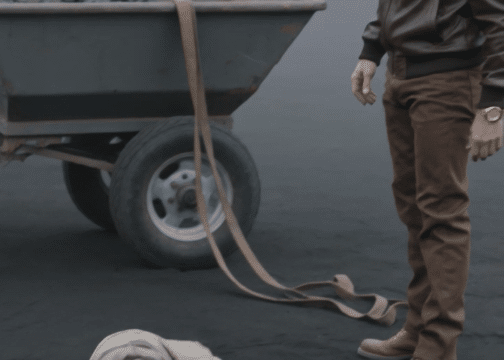
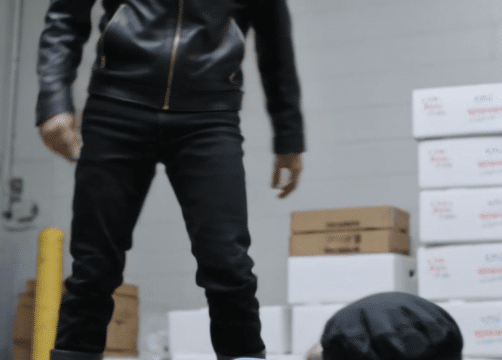
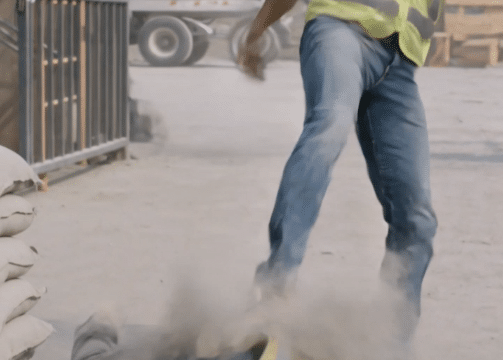
The recycling yard owner pointed beneath the garbage truck, where a single plastic bottle had rolled into the shadow of the rear wheel. His black boots were planted in the dirt, his leather-gloved hand aimed at the ground, and his expression carried the casual cruelty of a man who had spent years believing that poverty made other people his property.
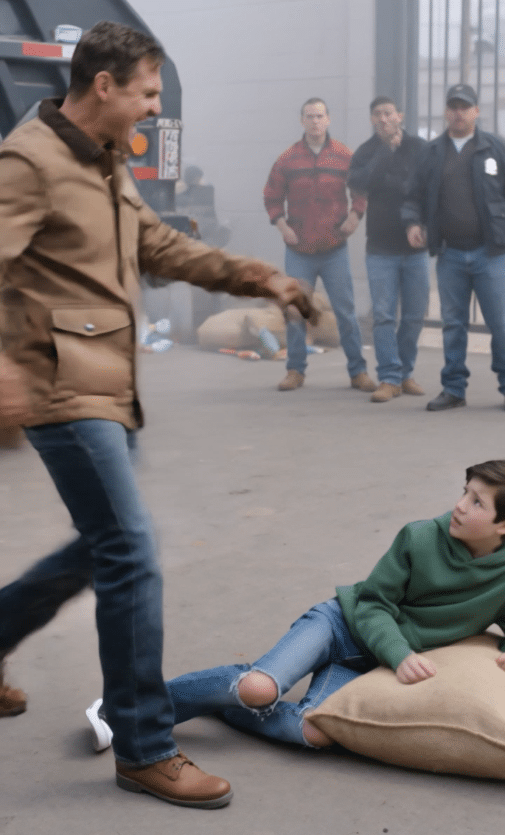
The boy standing in front of him was thirteen years old. His green hoodie had faded almost to gray, his jeans were torn at one knee, and a small burlap sack hung over his shoulder. He had spent the morning collecting discarded bottles, hoping to bring home enough money for his family to buy groceries.
Now, he stared at the bottle beneath the truck.
“It rolled under the truck,” he said quietly.
He wasn’t arguing. He wasn’t refusing to work. He was simply looking at the enormous tire, calculating the narrow space beneath the chassis, and wondering whether reaching for a few cents was worth risking his life.
The owner heard something entirely different.
He heard disobedience.
“Trash. Crawl in and get it.”
The words cut through the grinding machinery and the distant clatter of bottles being dumped into burlap sacks. Nearby workers lowered their eyes. A woman holding a sack of crushed plastic suddenly became fascinated by the ground, while an older collector shifted his weight and then froze when the owner glanced in his direction.
Everyone knew the rules of the yard, even though none of them had ever been written down.
The owner decided what a bottle was worth. He decided what a day’s work was worth. He decided which mistakes deserved a deduction and which people deserved to be shouted at until they stopped looking him in the eye.
And because the people who came through his iron gate were usually desperate for money, he had convinced himself that desperation gave him the right to do whatever he pleased.
The boy took one cautious step backward.
He knew the truck was dangerous. Its engine was still running, and its driver was somewhere beyond the driver’s door, waiting for the next load to be cleared. The boy had seen what happened when people worked too close to heavy machinery. He had no intention of crawling beneath a vehicle for a bottle that might barely buy a piece of bread.
The owner’s face tightened.
Without another warning, he stepped forward and delivered a forceful kick to the boy’s side shoulder. The child stumbled sideways and fell beside his burlap sack, scattering the bottles he had spent hours collecting.
His torn knee scraped against the rough ground. A thin trace of blood appeared where the skin had broken.
Before the boy could regain his balance, the owner struck him with exactly two more hard kicks, one to his back and one to his side. The boy curled away from the truck wheel, pulling his hand clear of the tire as plastic bottles rolled around him.
For a moment, the entire yard seemed to stop moving.
The crushing machine continued rumbling in the distance, but no one stepped forward. Several collectors covered their mouths. Others backed away, their faces pale, frightened not only by what they had witnessed but by the possibility that the same thing could happen to them.
The owner stood over the boy, breathing hard as though the child had somehow exhausted him.
“Every bottle is money you owe me.”
The boy looked up at him, stunned. His eyes were wet, but he didn’t cry out. He reached toward the burlap sack, trying to gather the bottles that had spilled across the dirt, because even now he seemed to understand that losing them might cost his family more than the humiliation he had just endured.
The owner watched him crawl toward his belongings and mistook his silence for submission.
He had no idea that someone outside the yard had already begun assembling a record of everything he had done.
And when the iron gate finally swung open, the first thing he heard was not another worker begging for mercy.
It was an order to stop the truck.
Act II
The boy’s name was Noah Bennett, and for most of the previous year, he had learned how to make a little money stretch across a great deal of hunger.
His mother, Sarah, worked whenever she could find cleaning jobs. Some weeks, she returned home with enough money to keep the electricity running and put food on the table. Other weeks, a canceled shift or an unexpected bill forced her to choose which necessity could wait.
Noah had begun collecting bottles after school. At first, it had been a small contribution, something he could do without making his mother feel that she had failed him. He would walk familiar streets with a sack over his shoulder, picking up what other people threw away and carrying it to the recycling yard at the edge of town.
He liked to believe that he was helping.
Sarah never asked him to work at the yard. In fact, she repeatedly told him that school mattered more than the handful of dollars he could earn from collecting plastic. But when the refrigerator grew empty and the rent notice appeared beneath their door, Noah started going more often.
He told himself that he could stop whenever things improved.
Things never seemed to improve for long.
The recycling yard belonged to a man named Raymond Cole, who had inherited neither the property nor his business practices from anyone respectable. He had built his operation by buying discarded materials cheaply, selling them in bulk, and squeezing every possible cent from the people who brought them to him.
On paper, Cole’s business looked ordinary enough. Trucks arrived, plastic was sorted by type, metal was separated, and recyclable materials were shipped to processing facilities. He kept invoices, maintained a ledger, and paid for the property through a company registered in his own name.
But the people who worked inside the iron gate lived under a different set of rules.
Cole frequently changed the prices after collectors had already delivered their loads. He deducted money for supposed contamination, broken sacks, damaged equipment, and mistakes that no one could verify. When someone questioned the calculations, he threatened to stop buying from them.
For an adult with another source of income, that threat might have been manageable.
For people who depended on the yard to pay for food that evening, it could be devastating.
Cole understood the imbalance perfectly. He called it business.
His workers called it survival.
Noah had been coming to the yard long enough to recognize the warning signs. He knew which employees would weigh a sack honestly and which would wait for Cole to leave before admitting that a deduction was unfair. He knew that the old digital scale sometimes displayed a different number depending on who was standing beside it. He knew that collectors who complained too loudly could find themselves waiting for hours while everyone else was paid first.
And he knew better than to ask why a thirteen-year-old was allowed to earn money in a place where adults routinely handled industrial machinery.
Cole never asked questions about the children’s ages. He preferred not to know.
Noah had once brought home a crumpled receipt showing that the yard had paid him less than the amount written on the scale ticket. Sarah noticed the discrepancy and asked where it had come from.
He told her it was probably a mistake.
She looked at him for a long moment.
“People don’t get to decide your worth just because you need their money,” she told him.
Noah remembered those words, but remembering them did not make it easier to challenge a man who could refuse to buy his bottles the next morning.
That was the trap Cole had built. He did not need to lock the gate. He only needed to make the people outside it afraid of what would happen if they stopped coming.
There were other problems, too.
The truck paths crossed the sorting area, and collectors often worked close to reversing vehicles. Warning signals were inconsistent. No clear safety boundary separated the machinery from the people sorting plastic by hand. Cole had been told more than once that the arrangement was dangerous, but every improvement cost money, and he believed money spent protecting poor workers was money wasted.
Meanwhile, records were accumulating outside his control.
A worker who had lost pay over an unexplained deduction had kept his receipts. Another had written down the dates when children arrived at the yard. A third had reported that young collectors were being pressured to work near heavy vehicles.
Individually, each complaint had seemed small. Together, they began to reveal a pattern.
The first report reached a child labor inspector named Elaine Foster, a forty-five-year-old investigator who had spent years examining workplaces where vulnerable families were made to carry the cost of someone else’s greed.
She had learned that the ugliest abuses rarely announced themselves with dramatic confessions. They appeared in altered records, inconsistent wages, missing safety procedures, and adults who insisted that a child was there by choice.
Elaine began checking the yard’s business records and interviewing people who had worked there.
Several refused to speak openly. Some were afraid of losing their income. Others worried that Cole would learn who had complained and blacklist their families from nearby buyers.
But one detail kept appearing.
A young boy in a faded green hoodie was regularly seen carrying a burlap sack through the yard.
Elaine did not rush in after the first report. She gathered statements, examined available records, and coordinated with the appropriate authorities. She needed to establish what was happening, who was responsible, and whether anyone was in immediate danger.
Then she learned that Cole had been allowing a garbage truck to move through the collection area while children worked nearby.
That changed the urgency of the investigation.
And on the morning Noah reached for the bottles beneath the truck, Elaine was already on her way.
Act III
The iron gate swung open with a metallic crash.
Cole turned toward the sound, irritation already forming on his face. He expected a driver with another load, perhaps a supplier demanding payment, or someone from the neighborhood complaining about the noise.
Instead, a woman in a navy suit beneath a government field coat strode into the yard with two police officers beside her.
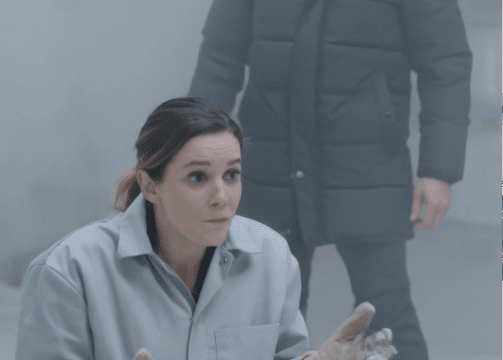
Her short blonde hair was swept away from her face. She carried no visible weapon and made no theatrical gesture. She simply moved with the calm certainty of someone who had arrived prepared to act.
One of the officers raised a hand toward the truck driver, signaling him to stop immediately.
The engine’s rumble faded as the vehicle came to a halt.
That sound, more than anything else, seemed to wake the yard from its paralysis. The collectors looked toward the gate. The driver leaned out of his cab. A man near the sorting table dropped the bottle he had been holding.
Cole’s expression changed.
He knew what police officers looked like. He knew what inspectors looked like, too. He had spent years treating official paperwork as a nuisance to be delayed, challenged, or buried beneath other documents.
But the woman approaching him did not look as though she had come to negotiate.
She crossed the space between the gate and the truck, then positioned herself directly between Cole and Noah. She did not strike him, shove him, or raise her voice. She simply occupied the path he would have to take if he wanted to reach the boy again.
Her authority was unmistakable.
“Step back,” one of the officers ordered.
Cole stopped.
Behind the woman, Noah lay beside his scattered bottles, struggling to sit upright. His shoulder hurt, and his scraped knee stung against the dirt. He stared at the unfamiliar faces as if he could not understand why anyone had finally entered the yard for him.
Elaine looked briefly toward him, then back at Cole.
Her voice was cold enough to silence the remaining whispers.
“You just turned one bottle into a federal case.”
Cole blinked.
For the first time that morning, he seemed unable to find the right words.
“A federal case?”
The question came out smaller than he intended.
Until that moment, he had believed the incident belonged entirely to him. A child had made a mistake, he had imposed a punishment, and the other workers had watched. In Cole’s mind, that was the beginning and end of the matter.
He had not considered that the yard was a workplace subject to laws he could not rewrite. He had not considered that the age of the boy, the danger posed by the truck, and the violence inflicted on him could turn an ordinary morning into evidence of serious wrongdoing.
Most of all, he had not considered that someone had been watching his operation long before the bottle rolled beneath the chassis.
Elaine did not display her badge for the benefit of the camera or offer Cole a dramatic explanation. She did not need to. Her accompanying officers had already stopped the vehicle, secured the immediate area, and begun separating the facts from the owner’s excuses.
One officer moved toward Noah to make sure he was safe and could receive medical attention. Another instructed Cole to remain where he was while the scene was assessed.
Elaine kept her attention on the man who had ordered a child to crawl under a truck.
“You need to understand something,” she said. “This isn’t about the price of a bottle.”
Cole glanced toward the collectors.
They were still frightened. Some covered their mouths, and others stepped farther away. No one rushed to Noah’s side, but their silence had changed. Before, it had been the silence of people afraid of Cole. Now it was the silence of people who had just seen someone with authority refuse to look away.
Cole noticed the difference, and it unsettled him more than he wanted to admit.
He had built his influence on the assumption that nobody would challenge him if he made the consequences of resistance frightening enough.
Yet here stood a government inspector who had entered through his gate without asking his permission.
And beside her stood two police officers who were no longer treating him as the man in charge.
Cole swallowed and tried to recover his familiar tone.
“This is my property,” he said. “These people come here because they want to.”
Elaine held his gaze.
“Then you should have no trouble explaining your records.”
That was when Cole realized the woman had not come merely because someone had seen him kick a child.
She had come because the incident fit into something much larger.
And the paperwork he had spent years manipulating was about to become his greatest liability.
Act IV
The first thing Elaine requested was the yard’s payment ledger.
Cole hesitated just long enough for everyone to notice.
It was a small hesitation, barely a second, but it carried the weight of a man searching for a new version of the truth. He had expected anger, perhaps a warning, perhaps a demand that he explain himself.
He had not expected an investigation that could reach beyond the fence.
“My books are private,” he said.
“Your records may be relevant to an investigation,” Elaine replied. “You can discuss access with the officers.”
Cole looked toward his office, a cramped metal-sided building beside the sorting area. Inside were his invoices, payment slips, employee schedules, and the notebooks he used when he wanted to keep a second set of figures away from his accountant.
He had always thought of those records as protection.
Now he was wondering which pages could be explained and which could not.
The officers began documenting the scene and speaking with witnesses. They recorded the location of the truck, the proximity of the collection area to the vehicle’s path, and the condition of the ground where Noah had fallen. The truck remained stopped while the immediate safety concerns were addressed.
Noah was helped away from the wheel and checked for injuries. His knee needed attention, and his shoulder was painful, but he was conscious and able to speak. When an officer asked what had happened, Noah looked toward Cole before answering.
That glance said more than any sentence could have.
He was still afraid of the man who had hurt him.
Elaine noticed.
She crouched far enough away not to crowd the boy and spoke in a gentler voice. She told him he did not have to approach Cole, and that the adults present would handle the immediate situation. She did not promise that everything would be easy, because she knew better than to offer a child a guarantee she could not control.
Instead, she made sure he was heard.
Noah explained that the bottle had rolled beneath the truck. He explained that he had been afraid to reach for it. He described the kick, the two blows that followed, and the owner’s words about the money he supposedly owed.
Each detail was recorded.
The collectors, seeing that the officers were listening rather than threatening them, began to speak as well. No one rushed forward to help Noah during the assault, and that fact remained painful. But fear had kept them frozen in the moment, and the arrival of the authorities had begun to loosen its hold.
One worker described deductions that appeared on payment slips without explanation. Another recalled children being sent to sort bottles near moving vehicles. A third remembered Cole threatening to withhold payment from anyone who questioned the scale.
None of these statements automatically proved every allegation. Elaine knew that. The records would have to be examined, the accounts compared, and the relevant laws applied to the evidence.
But for the first time, the people who had been forced to keep their heads down were being asked what they had seen.
Cole tried to interrupt.
“They’re all angry because they don’t like the prices I pay,” he said. “You can’t run a business if every person who gets upset decides to accuse the owner of something.”
Elaine stood.
“Then your records should speak for themselves.”
The officers proceeded with the appropriate steps to preserve relevant evidence and determine what action was legally justified. The yard’s operation would not simply continue as though nothing had happened. The truck stayed stopped while the immediate hazards were assessed, and the questions surrounding child labor, workplace safety, and the assault were referred through the proper channels.
Cole’s authority had not vanished because a woman in a field coat had spoken a sentence. It was disappearing because the evidence was no longer confined to his office, his employees, or the rules he had invented for people who needed his money.
The payment ledger revealed inconsistencies that demanded further scrutiny. Dates, deductions, and receipts did not always align. Some collectors had received less than the recorded value of their loads, while other entries offered no clear explanation for the money withheld.
The discrepancies were not, by themselves, a final verdict. But they gave investigators concrete questions to pursue, and Cole could no longer dismiss every complaint as the resentment of an ungrateful worker.
The most damaging detail was not a single missing payment.
It was the pattern.
The same names appeared beside repeated deductions. The same vague explanations appeared across different weeks. The same vulnerable families seemed to bear the cost whenever the figures changed.
Noah had thought he was bringing bottles to a man who might pay him a little money.
He had unknowingly walked into a system that depended on people being too frightened to question what they were owed.
Cole looked around the yard and found no one willing to meet his eyes.
For years, he had used the fear of losing a day’s pay to keep people quiet. Now he was watching them answer questions in front of officials, and he understood that their accounts could be compared against one another.
He tried one final defense.
“The boy was on my property,” he said. “I was correcting a problem.”
Elaine’s expression hardened.
“A child is not a problem you get to kick into submission.”
The words settled over the yard.
Noah stood near the officers, his burlap sack held against his chest. He looked smaller than ever in his faded green hoodie, but he was no longer alone beside the truck.
Cole had spent years believing that the people who came through his gate had nowhere else to turn.
He was about to discover that the gate had never been a wall around his power.
It had only been the place where his conduct became visible.
Act V
The consequences did not arrive as a single dramatic announcement.
They came through interviews, records, formal notices, and the slow, methodical work of determining what had happened and which laws had been broken. The assault on Noah was investigated separately from the questions surrounding the yard’s labor practices and payment records. Each allegation required evidence, and each decision had to follow the appropriate process.
Cole could no longer settle the matter by shouting at the person who had complained.
The yard’s unsafe practices came under scrutiny. The authorities examined how children had been allowed into the work area, how vehicles moved through spaces occupied by collectors, and whether the business had complied with applicable labor and safety requirements.
The payment records were also reviewed. Where investigators established that deductions were improper, the affected workers pursued corrections through the relevant procedures. What had once been a private argument between a collector and a man holding the money became a matter that could be examined against receipts, ledgers, and witness statements.
Cole faced serious legal and business consequences as the investigations proceeded. The outcome was not decided by a dramatic speech at the gate, but by the evidence gathered there and the actions taken through the proper authorities.
The yard’s old routine could not simply resume unchanged.
And Noah, for the first time in months, did not have to return the next morning and stand in front of Cole’s office, hoping the man would decide to treat him fairly.
When Sarah arrived to collect her son, she looked at the scrape on his knee and the way he held his shoulder. She tried to remain composed in front of the officers, but the moment she reached him, her face crumpled.
She wrapped both arms around him.
Noah had been trying to stay brave since the first kick. He had swallowed his fear when the other workers looked away, swallowed his pain when he gathered the scattered bottles, and swallowed the shame of being called trash by a grown man who had watched him work for pennies.
In his mother’s arms, he finally began to cry.
Sarah held him tighter.
“You don’t have to earn your place in this world,” she whispered. “Not by hurting yourself. Not by letting anyone hurt you.”
For a long time, Noah said nothing.
Then he asked the question he had been carrying since the morning began.
“Are we still going to have enough money?”
Sarah closed her eyes.
She could not promise that the next week would be easy. Their bills had not disappeared, and the money Noah used to bring home had been part of the family’s fragile budget. She would have to find other work, ask for help where it was available, and make decisions she wished no mother had to make.
But she could tell him the truth.
“We’ll figure it out,” she said. “Together. And you are going back to school.”
Noah looked over her shoulder toward the yard.
The iron gate stood open. Workers were still being interviewed. The garbage truck remained stopped, and the bottle that had started everything lay somewhere beneath the chassis, forgotten by everyone who had once treated it as the most important object in the world.
For a moment, Noah wondered whether he should retrieve it.
It was such a small thing. A few cents, perhaps. The sort of thing he had spent months collecting because every little bit mattered at home.
Then he understood that the bottle had never been the real issue.
Cole had not kicked him because the plastic was valuable. He had kicked him because Noah had hesitated, because a frightened child had made a decision for his own safety instead of obeying without question. The bottle had simply given Cole an excuse to reveal what he believed about power.
He believed money made him important.
He believed poverty made other people less deserving of dignity.
He believed that if he controlled someone’s next meal, he could control everything else about them, too.
But the woman in the navy suit had entered his yard and drawn a boundary he could not erase with a ledger or a threat.
She had not needed to strike him. She had not needed to humiliate him in return. She had simply stopped him from reaching Noah, preserved the scene, and made sure that the truth would be examined by people who did not answer to him.
That was the reversal Cole had never anticipated.
The boy he had called trash was a child entitled to protection. The collectors he had treated as disposable workers were witnesses whose accounts mattered. And the business owner who had believed himself untouchable was now required to answer questions beyond the boundaries of his own property.
As Sarah guided Noah toward the gate, he glanced back one last time.
Elaine was speaking with an officer near the truck. She noticed him watching and gave him a small, reassuring nod.
Noah returned it.
Then he walked through the open gate beside his mother, his empty burlap sack resting against his hip. It no longer seemed like proof of how little he had earned that day. It was simply a sack, something he could put down when he needed to rest.
Behind him, the recycling yard continued to stand amid its dust, plastic, and machinery. The investigation would take time. There would be paperwork, difficult conversations, and consequences that could not be measured in a single afternoon.
But one thing had changed before anyone left the property.
Cole no longer controlled the only version of the story.
And the bottle he had treated as a debt owed to him had become the small, ordinary object that exposed how much he had mistaken fear for power.
Trim repeated explanations of Cole’s control