Act I
“Trash. Pull the rail.”
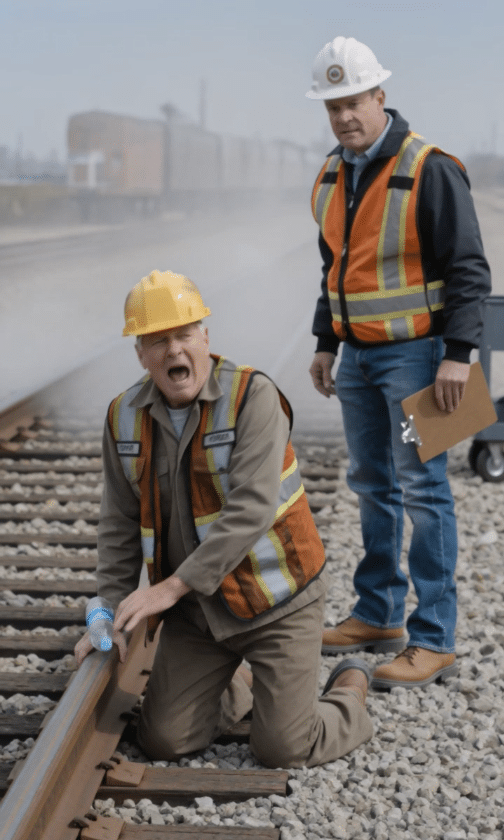
The crew chief pointed toward the heavy steel line as if the exhausted man standing beside it had committed a crime by stopping to breathe. His new orange reflective vest was spotless, his white hard hat sat perfectly straight, and a clipboard documenting the crew’s production bonuses rested beneath his arm.
Across from him stood a sixty-four-year-old worker wearing a scratched yellow hard hat, faded work pants, and an old reflective vest dulled by years of dust. His name was Walter Hayes. His shoulders sagged with exhaustion, and one hand trembled slightly as he held a plastic water bottle.
“I just needed a breath.”
Walter wasn’t asking to leave early. He wasn’t refusing to work. He had been assigned light duty because his body could no longer handle the heaviest tasks, and he was trying to finish the shift without pushing himself beyond what he could safely manage.
But the man in charge had other priorities.
The crew chief, Bradley Knox, was forty-six and fiercely protective of the production bonuses tied to his team’s output. Every completed section of rail work brought him closer to a payout he had already mentally spent. Every delay felt like money being taken directly from his pocket.
And Bradley had decided that the easiest way to protect his bonus was to make everyone beneath him afraid of slowing down.
“Trash. Pull the rail.”
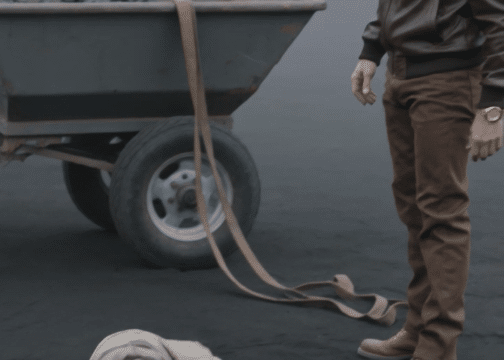
Walter looked toward the steel line and then at the water bottle in his hand. The rail was heavy, the gravel beneath his boots uneven, and the tool cart stood several feet away with the equipment the crew had been using all morning.
He had spent decades working with his hands. He knew the difference between ordinary fatigue and the kind of exhaustion that warned him to stop before a manageable problem became a serious injury.
Bradley saw only hesitation.
“You heard me.”
Walter lowered the bottle and set it beside the tool cart. He adjusted his grip on the pull line, trying to find a position that wouldn’t strain his back. He didn’t want an argument. He wanted to finish the task, collect his wages, and go home.
That was when Bradley stepped forward.
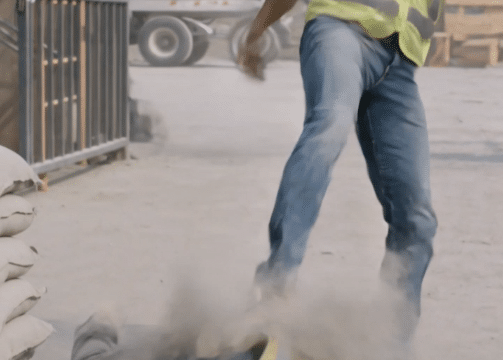
The crew chief delivered a forceful kick to Walter’s chest, knocking him backward onto the rail gravel. Walter’s hand scraped against the rough stones as he landed, leaving a thin trace of blood across his palm.
Before Walter could get his footing, Bradley struck him with exactly two more hard kicks, one to his back and one to his side, as the older man struggled to pull himself away from the rail edge.
The crew went silent.
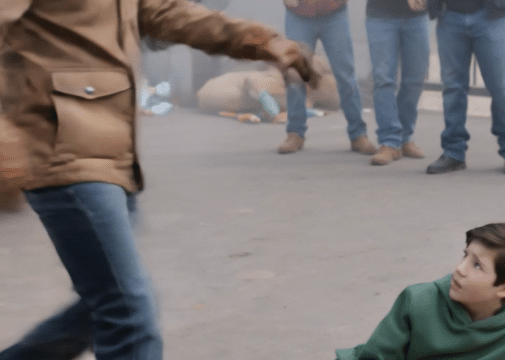
A worker near the tool cart covered his mouth. Another stepped backward, his eyes fixed on Walter lying beside the steel rail. Several men looked toward Bradley as if waiting for him to realize what he had done.
Nobody moved to help.
Bradley stood over Walter, his breathing sharp with anger, as though the older man’s need for a few seconds of rest had been a personal insult.
“Old men don’t slow my bonus.”
Walter pressed his scraped hand against the gravel and tried to sit up. His face tightened with pain, but he made no attempt to strike back or challenge Bradley. He seemed more concerned with moving away from the rail than with the man standing over him.
Bradley mistook that restraint for weakness.
He glanced at his clipboard, then toward the crew, expecting the familiar return of obedience. The schedule would continue. The work would get done. By the end of the day, he would still be the man who decided who belonged on the crew and who could be sent home.
Then a government vehicle braked beside the rail line.
Its horn chirped once.
The driver-side door opened, and a man in a dark green government jacket stepped out, his rail boots striking the ground with deliberate certainty. He carried an official clipboard and looked directly toward the crew chief.
Bradley straightened.
The inspector crossed the gravel, placed his clipboard firmly in front of Bradley’s chest, and ordered the entire crew to stop work.
Then he looked the crew chief in the eye.
“You just derailed your own job.”
Bradley’s expression emptied.
“My job?”
For the first time that day, the man who had been so certain of his authority seemed unable to understand what was happening.
Because the inspector had not arrived to discuss a minor scheduling problem.
He had come to examine a railway operation where safety had been sacrificed for speed—and Bradley had just made himself the clearest piece of evidence.
Act II
Walter Hayes had spent nearly forty years working around heavy equipment, construction sites, and railway maintenance crews.
He had started young, when his back was stronger and the thought of retirement seemed like something that happened to other people. He learned to read the weather by the feel of the air, to recognize a dangerous vibration in a machine, and to notice when a coworker was pushing himself too hard to admit that he needed a break.
Work had given him a home, a family, and a sense of purpose.
It had also taken its share from him.
Years of lifting, bending, standing on uneven ground, and working through long shifts had left him with persistent pain. After a medical assessment, Walter had been assigned light duty. He could still contribute, but he was no longer supposed to handle the heaviest physical tasks or be pressured into work beyond his restrictions.
The change had been difficult to accept.
Walter had never been the kind of man who wanted others to carry his burden. He had taken pride in being dependable, the worker who arrived early and stayed until the job was done. Being assigned lighter tasks made him feel as if he were standing at the edge of a life he no longer recognized.
But he had bills to pay.
His wife, Martha, had passed away several years earlier, leaving Walter with a modest home, a small retirement account, and more memories than money. A series of unexpected expenses had eaten into his savings. When the railway contractor offered him a position that accommodated his limitations, he accepted it gratefully.
He knew the work would be demanding. He simply believed the company meant what it said about light duty.
Bradley Knox had made that belief difficult to maintain.
The crew chief was younger, ambitious, and obsessed with the numbers displayed on his production reports. His compensation included performance incentives, and he had become convinced that every pause threatened the figures he needed to qualify for his largest bonus.
At first, he expressed his impatience through sarcasm.
He complained that the crew took too long to position equipment. He mocked workers who asked for clarification. He described experienced employees as slow whenever they refused to rush a difficult task.
Then he began using the bonus system as a threat.
He reminded workers that poor production numbers could affect their future assignments. He warned that the company had plenty of people willing to take their places. If someone questioned a deadline or raised a safety concern, Bradley would point at his clipboard and tell them the schedule did not care about their excuses.
The clipboard became a symbol of his authority.
It contained work targets, task assignments, and the numbers he believed would secure his bonus. He carried it everywhere, tapping its edge against his palm whenever he wanted the crew to understand that he was watching.
Walter had learned to avoid drawing attention to himself.
He completed the lighter tasks assigned to him, checked his equipment, and tried not to give Bradley a reason to complain. When his back began to ache, he slowed his movements rather than risk an injury. When the afternoon heat settled over the rail line, he drank water in short intervals and kept working.
He did not expect special treatment.
He expected the restrictions placed on his job to mean something.
One morning, Bradley had assigned him to assist with positioning a section of rail. Walter reminded him that the heaviest pulling was outside his light-duty assignment. Bradley responded by telling him that everyone had to contribute and that the crew couldn’t afford passengers.
Walter swallowed the insult and did what he safely could.
Later, he overheard Bradley discussing the bonus with another supervisor. Bradley complained that the team was falling behind the projected schedule and said he intended to make up the lost time before the next review.
Walter did not know the details of the bonus arrangement. He only knew that Bradley’s mood had become more volatile whenever the crew slowed down.
The older worker began carrying his water bottle everywhere. It was a small act of self-preservation, a way to remind himself that he could still manage his body even when other people tried to dictate what it could endure.
But the workplace had another problem, one far more serious than Bradley’s temper.
A railway safety inspector named Thomas Reed had been reviewing reports from the maintenance project. He was fifty-nine, experienced in railway operations, and accustomed to finding the difference between a crew that worked efficiently and one that took shortcuts.
His inspection had begun with discrepancies between the scheduled tasks and the recorded completion times. Several entries suggested that work had been completed faster than the normal safety procedures would allow. Other records showed that employees had been assigned tasks that did not clearly match their documented restrictions.
Thomas did not assume wrongdoing from a spreadsheet. Production estimates could be inaccurate, paperwork could be incomplete, and schedules could change for legitimate reasons.
So he began checking the records against the actual worksite.
He reviewed the work plans, safety documentation, and crew assignments. He asked questions about how the team handled heavy rail, how tasks were approved, and whether workers had a safe way to report concerns without fear of retaliation.
Some answers were vague.
Others were defensive.
The production reports looked impressive, but the explanations behind them were not always convincing.
Thomas requested a closer review of the crew’s work practices and arranged a site visit to examine the operation directly.
He had no intention of accusing a crew chief simply because he was demanding. He wanted evidence of whether the job was being performed safely and in accordance with the applicable requirements.
He was about to find out that the problem was not just what Bradley was asking his crew to do.
It was what Bradley was willing to do to anyone who refused.
Act III
Thomas Reed had barely stepped away from his government vehicle when he saw Walter on the gravel and Bradley standing over him.
He did not need a full explanation to understand that work had to stop.
He moved toward the crew chief, held his official clipboard firmly in front of him, and issued the order to halt the operation. The workers immediately fell silent. The distant train horn seemed to carry across the site with unusual clarity.
Bradley stared at the inspector.
He knew the dark green jacket. He recognized the official documents clipped to the board. He had been informed that the project could be subject to inspection, but he had assumed any visit would focus on equipment records, completion figures, and routine compliance checks.
He had not expected Thomas to arrive at the precise moment his authority was collapsing in front of his crew.
“You just derailed your own job,” Thomas said.
“My job?”
Bradley tried to laugh, but the sound never fully emerged.
“You don’t know what happened here.”
Thomas glanced toward Walter, who was still trying to push himself upright. He then turned his attention back to Bradley.
“I know the work is stopped. I know a worker is injured. And I know I’m going to need an explanation for what I just witnessed.”
Bradley gestured toward the rail line.
“He was refusing an assignment. We have a schedule to meet.”
Thomas did not move.
“Was he assigned to light duty?”
Bradley’s eyes shifted.
“He’s on the crew.”
“That wasn’t my question.”
The inspector’s voice remained controlled, but the words left Bradley with little room to maneuver.
Thomas instructed the workers to remain clear of the rail and equipment while the immediate situation was assessed. He made sure that Walter could receive assistance and that no one resumed the task before the worksite was considered safe.
The witnesses remained shaken. Several covered their mouths, and others stepped away from the rail. No one had helped Walter during the assault, but now the inspector’s presence gave the scene a different kind of gravity. The workers understood that the event would no longer be settled through Bradley’s version of what had happened.
Thomas asked who had been responsible for the task assignment.
Bradley raised his clipboard.
“I am. I’m the crew chief. I have to keep people moving.”
“And you believe that gives you the right to use force against an employee?”
Bradley said nothing.
Thomas turned toward Walter and asked whether he could speak. The older worker nodded slowly. His hand was scraped from the gravel, and he looked exhausted, but he was alert.
Walter explained that he had stopped to drink water and catch his breath. He said Bradley had ordered him to pull the rail, despite his light-duty assignment. When he set down the bottle and tried to comply, Bradley had kicked him.
Walter did not embellish the account. He did not raise his voice or demand revenge. He simply described what had happened.
Thomas listened, then asked the other workers what they had seen. The crew remained reluctant at first, but their accounts began to establish the sequence of events. They described Walter’s pause, Bradley’s order, and the assault that followed.
Thomas took notes.
The incident was serious on its own, but it also raised questions about the conditions under which the crew was operating. If Bradley was willing to attack a worker for stopping to drink water, Thomas needed to determine whether the crew had been pressured into unsafe practices elsewhere.
He requested the crew’s task assignments and relevant safety records.
Bradley immediately objected.
“Those are company documents. You can’t just take them because somebody had a bad day.”
Thomas looked at him.
“An injured worker and a reported assault are not a bad day.”
He explained that the appropriate records would be reviewed under the applicable inspection process. The crew’s safety procedures, work assignments, and production documentation would be examined, and any suspected violations would be handled through the proper channels.
Bradley tried another approach.
“I’m the one responsible for meeting the production targets. If this crew misses the schedule, everyone loses.”
Thomas glanced at the clipboard.
“Everyone?”
Bradley tightened his grip.
The inspector asked him to explain how the bonus was calculated and how production targets affected task assignments. He wanted to know whether the crew’s recorded output reflected work performed under approved conditions or whether the pressure to meet the numbers had encouraged shortcuts.
Bradley insisted that the bonus was legitimate and that he had done nothing more than demand productivity.
Thomas did not dispute the existence of a performance incentive. He wanted to know whether it had influenced decisions that should have been governed by safety requirements.
That distinction mattered.
A bonus was not automatically improper. A crew chief could be rewarded for completing work efficiently, provided the work was done safely and in compliance with the rules. But if the incentive encouraged someone to disregard medical restrictions, pressure workers into dangerous tasks, or falsify completion records, the arrangement could become part of a much larger problem.
Thomas had already noticed inconsistencies in the project’s documentation before arriving at the site.
Now Bradley’s conduct had given those inconsistencies a human context.
The inspector looked again at the old worker’s scratched yellow hard hat, his faded vest, and the water bottle lying beside the tool cart.
Then he turned toward Bradley.
“This inspection is no longer just about your numbers.”
Bradley’s face tightened.
For the first time, he seemed to understand that the clipboard he had used to frighten his crew might become the document that exposed him.
Act IV
The railway operation remained stopped while Thomas Reed began the inspection.
The pause was not a theatrical punishment. It was a practical response to an injured worker, an assault allegation, and unresolved questions about whether the crew could safely continue. Thomas needed to ensure that the immediate hazards were controlled before any work resumed.
Bradley stood several feet away, his orange vest suddenly looking less like a badge of authority and more like an ordinary piece of equipment.
He tried to speak to the crew, but Thomas instructed him not to interfere with the initial accounts. The workers were to be allowed to describe what they had witnessed without being coached or pressured.
For years, Bradley had controlled the flow of information. He decided which problems were reported, which delays were explained, and which workers were labeled difficult. He could make a complaint disappear beneath a revised schedule or dismiss a safety concern as an excuse.
Now he was no longer the only person asking the questions.
Thomas examined the relevant work assignments and requested documentation confirming Walter’s light-duty status. The records showed that Walter’s limitations had been communicated to the appropriate personnel. That did not automatically determine every question about the task, but it made Bradley’s claim that he had been unaware of the restriction increasingly difficult to sustain.
Thomas also reviewed the production records that had initially drawn his attention to the site.
Some completion entries required clarification. Certain tasks appeared to have been logged in ways that did not clearly correspond with the supporting documentation. The inspector wanted to establish whether the discrepancies were clerical errors, changes in the work plan, or evidence that the project had been pushed beyond approved procedures.
Bradley insisted that the crew had simply worked hard.
“We got the job done,” he said. “That’s what the numbers show.”
Thomas tapped his clipboard.
“Numbers show what someone entered. We still have to establish what actually happened.”
The distinction sent a ripple through the crew.
Several workers had suspected that the production targets were encouraging unsafe behavior, but they had been afraid to question Bradley. Their shifts depended on his assignments, and he had repeatedly reminded them that the contractor could replace anyone who failed to meet expectations.
With Thomas present, some began to explain how the pressure had affected their work.
They described being told to keep moving when they were exhausted. They recalled being assigned tasks that did not fit their training or restrictions. One worker explained that he had once questioned a work sequence and been warned that the delay would be reflected in the crew’s performance figures.
These statements required verification. Thomas did not treat them as final proof of every allegation, but he documented the accounts and compared them with the available records.
The emerging picture was troubling.
The crew’s incentive system had created a powerful reason to prioritize speed. Bradley’s behavior had made that pressure personal. Workers were not merely worried about missing a target; they were worried about what the crew chief might do if they slowed down.
Walter had been assigned light duty for a reason. Yet he had been ordered to pull a heavy rail line and assaulted when he paused.
The incident showed how quickly a production target could become dangerous when the person enforcing it believed that obedience mattered more than safety.
Thomas required the relevant documentation to be preserved and referred the suspected compliance issues for further review. The contractor was instructed to address the immediate safety concerns before the affected work could resume.
Bradley’s authority over the crew was suspended while the incident and the relevant work practices were examined. His production bonus was placed under review according to the contractor’s procedures, and he was told not to contact witnesses about their statements.
He reacted with disbelief.
“You’re taking my job over one pause?”
Thomas met his eyes.
“No. Your decisions are being examined because of what happened here.”
Bradley glanced at Walter.
The older worker was now receiving attention from a colleague who had been too frightened to move earlier. His scraped hand was being cleaned, and he was being helped away from the rail. He did not look triumphant. He looked tired, shaken, and deeply disappointed.
That expression unsettled Bradley more than anger would have.
He had expected Walter to beg for his job, apologize for slowing the crew, or promise never to challenge him again. Instead, Walter had told the truth and allowed the inspector to do his work.
The investigation continued after the immediate scene was secured. The contractor reviewed the incident, the crew’s safety arrangements, and the relationship between performance incentives and work assignments. The appropriate authorities examined the allegations within their jurisdiction.
The process would take time, and Thomas made no promise that every concern would result in a violation or penalty. The evidence had to support each finding.
But Bradley could no longer use his position to decide the outcome before the facts were examined.
The man who had treated a few seconds of rest as an act of defiance was now required to answer questions about his own decisions.
And the bonus he had protected so fiercely was no longer guaranteed.
It had become part of the investigation into whether he had placed production ahead of the people responsible for doing the work.
Act V
Walter spent the following days recovering from the assault and the shock of what had happened.
His injuries were painful, but the emotional aftermath proved harder to explain. He kept remembering how quickly the crew had stepped back when Bradley attacked him. He understood that the workers had been frightened, and he knew they were dependent on their jobs.
Still, a part of him had hoped someone would move.
He had spent decades believing that the people who worked beside you would at least try to help when something went wrong. The silence on the rail line had shaken that belief.
One evening, he sat at his kitchen table with his water bottle beside him. It was the same bottle he had carried to work that morning, now bearing a scuff from where it had fallen near the tool cart.
His daughter, Emily, had come by after hearing about the incident. She looked at his bandaged hand and shook her head in disbelief.
“You went to work to earn a paycheck,” she said. “You didn’t go there to be hurt.”
Walter looked down at his palm.
“I know.”
“Then why do you keep acting like you did something wrong?”
He struggled to answer.
The truth was that Bradley had made him feel ashamed of being tired. The crew chief had treated a simple human need as proof that Walter no longer belonged in the workforce. After years of taking pride in his reliability, Walter had begun to wonder whether his age had made him a burden.
Emily reached across the table.
“You’re allowed to need a break, Dad.”
The words brought tears to Walter’s eyes.
He had heard versions of them before, but he had never needed to believe them as much as he did now.
The formal review continued. Thomas Reed’s inspection findings were assessed alongside the contractor’s investigation into the assault and the crew’s working conditions. The available records were compared with witness accounts, task assignments, and the documentation supporting the production figures.
Where the evidence established safety deficiencies, the contractor was required to address them before the affected work could proceed. The company reviewed how light-duty assignments were communicated and enforced, and it strengthened the process for reporting concerns without routing every complaint through the supervisor being questioned.
The production incentive system also received scrutiny. The existence of a bonus was not itself proof of wrongdoing, but the review examined whether the targets or the way they were enforced had encouraged unsafe decisions. The contractor was required to ensure that productivity expectations did not override safety obligations.
Bradley did not return to supervising the crew. Following the disciplinary process, his employment ended, and the findings concerning the incident were handled through the appropriate channels. Any further consequences would depend on the relevant authorities and the evidence available to them.
The outcome was not delivered through a dramatic announcement at the rail line. It came through documentation, interviews, and decisions that had to withstand scrutiny.
But for Walter, the most important result was simpler.
He was no longer being asked to work under a man who believed exhaustion deserved punishment.
When he eventually returned to work, his assignment and limitations were clearly documented. The contractor had made changes to the way light-duty tasks were allocated, and the crew received clearer instructions about reporting unsafe demands.
The changes did not make the work effortless. The rails were still heavy, the gravel still shifted beneath his boots, and the schedule still mattered. But Walter no longer felt that taking a necessary breath might cost him his dignity or his livelihood.
Some of the workers who had stood frozen during the assault spoke to him afterward. They admitted that they had been afraid of Bradley and ashamed that they had done nothing. Walter listened, understanding that fear could make people hesitate even when they knew something was wrong.
He did not pretend their silence hadn’t hurt him.
But he also knew that the answer could not be to make every worker feel ashamed forever. The workplace needed conditions in which people could report dangerous conduct before someone ended up on the ground beside a steel rail.
Thomas visited the project again after the corrective measures were introduced. He reviewed the updated procedures and checked that the work could resume under safe conditions. He also spoke with workers about whether the new reporting process was clear and whether they understood how to raise concerns.
Walter saw him beside the government vehicle and walked over.
“I never thought a drink of water would bring an inspector out here,” Walter said.
Thomas gave a faint smile.
“The water wasn’t the problem.”
Walter looked toward the rail line.
He understood.
The water bottle had simply marked the moment when a man reached the limit of what his body could safely do. The real problem was the crew chief who believed that any limit was an insult to his authority.
Bradley had thought that a production bonus made him powerful. He believed the numbers on his clipboard mattered more than the people whose work produced them. He had convinced himself that a sixty-four-year-old man could be frightened into ignoring his own pain, and that the rest of the crew would remain silent because their paychecks depended on him.
He had been wrong.
The inspector had not needed to kick Bradley, threaten him, or humiliate him in front of the crew. He had used the authority of his office, preserved the evidence, stopped the work, and required the people responsible to answer for their decisions.
That was enough to change the balance of power.
Months later, Walter still carried his water bottle to work. He drank when he needed to, completed the tasks he was assigned, and stopped when his body told him that pushing harder would be unsafe.
He no longer apologized for it.
Sometimes, when the distant train horn sounded and the crew paused to check the line, he remembered the afternoon Bradley had stood over him and declared that old men would not slow his bonus.
Walter had once thought that sentence revealed how little the crew chief respected him.
Now he understood that it revealed something worse: Bradley had mistaken the people beneath him for obstacles between himself and a reward.
The bonus had never been the real measure of the job.
The real measure was whether the work could be completed without sacrificing the people doing it.
And on the day Bradley kicked a tired old worker into the gravel, he had exposed the one failure his clipboard could never hide.
He had protected his numbers so fiercely that he had forgotten what the work was supposed to protect.
By the time the inspector finished asking questions, the rail line was still there, the crew still had a job to do, and Walter still had years of experience worth respecting.
But Bradley’s authority was gone.
And the man who had demanded that an old worker pull the rail had finally learned that the most dangerous thing on a railway project wasn’t always the weight of the steel.
Sometimes, it was the person who believed that nothing—not even another human being—was allowed to slow him down.
Create a stronger final consequence