Act I
“My essay… I worked on it for three weeks…”
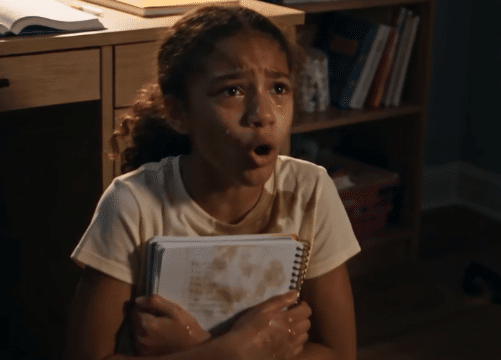
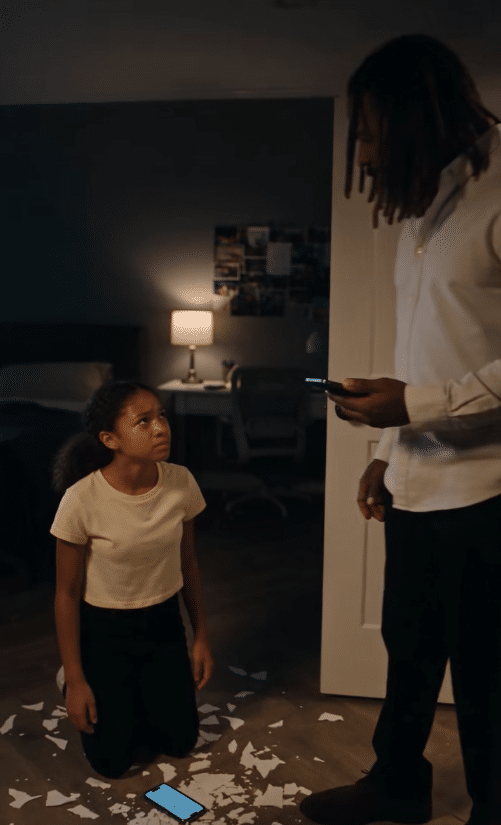
Nia knelt on her bedroom floor, surrounded by torn scraps of paper.
The light from her desk lamp fell across the mess, illuminating fragments of sentences she had rewritten again and again. Her cream-white T-shirt was creased from the long evening, and her fingers trembled as she tried to gather the pieces into one pile, as if putting them together might somehow restore what had been lost.
Three weeks of work.
Three weeks of late nights, careful revisions, and the kind of concentration that made her forget how tired she was. Every paragraph had been written with the hope that her essay might help open a door to a college education she couldn’t take for granted.
Now the essay lay in pieces.
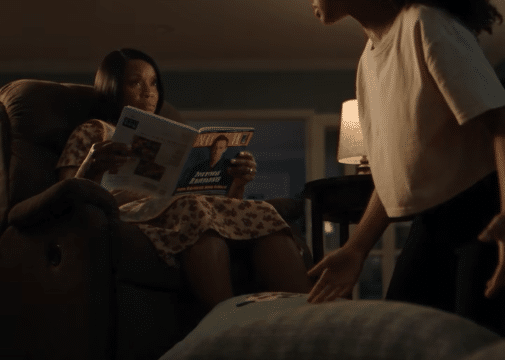
Her stepmother stood in the doorway, dressed in black, her glossy bob framing a face that showed remarkably little concern.
“Oops. It fell into the shredder.”
Nia slowly looked up.
For a moment, she seemed unable to understand the words. The essay had been on her desk. She had left it organized and ready for its final review. Now the pages had been destroyed, and her stepmother was describing the damage as though a glass had slipped from someone’s hand.
Nia glanced at the scraps again.
Then she remembered where the shredder was kept.
“The shredder is in Dad’s office! How did it fall in there?”
Her stepmother leaned against the doorframe.
“Paper flies. You should’ve been more careful.”
Nia stared at her, stunned by the ease with which she dismissed something that had taken weeks to create. The shredder wasn’t in Nia’s room. Her essay couldn’t have wandered into it by accident without someone carrying it there.
But her stepmother offered no explanation beyond a careless shrug.
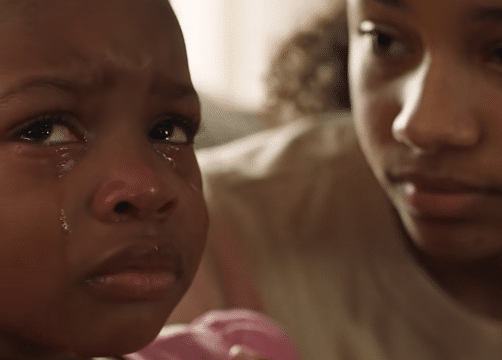
Nia’s eyes filled with tears.
“The deadline is tomorrow!”
The words came out almost as a plea, though she wasn’t begging her stepmother to care. She was trying to make her understand the consequences of what had happened.
Tomorrow.
That was all the time she had left.
The essay wasn’t an ordinary school assignment she could redo over the weekend. It was part of an application tied to a scholarship opportunity, and she had spent weeks making sure every word represented her effort, her ambitions, and the future she wanted.
Her stepmother’s expression barely changed.
“Then I guess college isn’t for everyone.”
Nia stopped moving.
The paper scraps lay between her hands, light enough to lift, impossible to turn back into the work they had been. She had been trying to save her essay, but the woman in the doorway seemed more interested in watching her realize how much she had lost.
Nia pressed the torn pages against her chest.
Her shoulders began to shake.
Then she asked the question that revealed how deeply the damage had gone.
Act II
“Why do you hate me so much?”
Nia’s voice was small, but the question filled the room.
She wasn’t asking about the essay anymore. She was asking about the pattern behind it: the way her achievements became inconveniences, the way her important school days seemed to invite unexpected demands, and the way her stepmother could turn something meaningful into a reason for Nia to feel foolish.
At fourteen, Nia had already learned to recognize certain silences.
There was the silence that came when someone was tired. The silence that followed an argument. And then there was the silence of someone who had been hurt so often that she was beginning to wonder whether the hurt was intentional.
She looked down at the scraps.
Her essay had taken three weeks because she had wanted to get it right. She had revised the opening, reconsidered the examples she used, and tried to find words that explained why an education mattered so much to her.
It wasn’t simply about attending college.
It was about having a chance to build something of her own.
Nia knew money could be a barrier. She knew a scholarship could make the difference between an ambition that remained a dream and one that became possible. That knowledge was why she had worked so hard on the application.
Every sentence had mattered.
Now she was surrounded by pieces of those sentences, unable to tell which fragments belonged together without carefully examining them one by one.
Her stepmother tilted her head.
“Hate? I just… don’t think you’re college material.”
The words landed harder than the explanation about the shredder.
Nia looked up.
There was no practical advice in the remark, no concern about the deadline, no offer to help her reconstruct the essay. Her stepmother wasn’t saying that the application needed more work or that the deadline was difficult to meet.
She was questioning whether Nia deserved to try.
The girl felt something inside her sink.
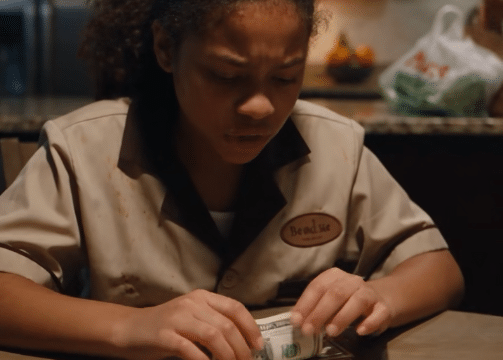
She had spent so long trying to prove that she could be responsible, capable, and serious about her future. She worked at school, took on a part-time job, and tried to keep her ambitions alive even when the adults around her seemed unwilling to encourage them.
Now the person standing in her doorway had reduced those efforts to a verdict about who Nia was.
Not ready.
Not capable.
Not college material.
Nia gathered another handful of scraps, but her hands were shaking too much to arrange them neatly. Tears slipped down her cheeks and fell onto the paper.
Her stepmother watched for another moment.
Then she turned away.
A small, satisfied smile appeared on her face as she began to leave the doorway. She didn’t touch Nia. She didn’t need to. The shredded essay and the deadline had already done the damage she had come to dismiss.
Nia remained on the floor.
She could still try to piece the pages together, but the clock was moving toward tomorrow. Even if she recovered every fragment, she would have to reconstruct the essay under impossible pressure.
For the first time that evening, she allowed herself to wonder whether her stepmother was right about one thing: perhaps the opportunity was already gone.
Then a phone chimed.
Footsteps approached the bedroom.
Marcus had just come home.
And the message waiting on his phone would reveal that Nia’s future might not be as easily destroyed as the paper scattered across her floor.
Act III
Marcus appeared in the doorway wearing a white shirt, his shoulder-length dreadlocks resting against his shoulders. He had his phone in his hand, and its screen had just lit up with a new email notification.
At first, he didn’t notice the full extent of the mess.
Then he saw Nia kneeling on the floor.
He saw the torn paper scattered around her, the way she clutched the fragments in her hands, and the tears on her face. His expression shifted as he took in the scene.
Nia had been working on an important scholarship essay. He knew it mattered to her. He also knew she had spent weeks preparing it, carefully balancing her schoolwork with everything else she was expected to do.
Now the essay was in pieces.
Marcus looked toward the hallway, where his wife had been standing moments earlier. But before he could ask what had happened, the phone in his hand drew his attention again.
The email was from the scholarship board.
He opened it.
His eyes moved across the message, and he paused.
Then he looked at Nia.
“Nia… you got an email from the scholarship board.”
Nia lifted her head.
For a moment, she didn’t seem to understand why he was talking about an email while she sat among the remains of her essay. She had just been told that college wasn’t for everyone. She had been trying to work out whether any part of her application could still be saved.
Now her father was telling her that the scholarship board had contacted her.
“What?”
Marcus read the message again to make sure he had understood it correctly.
The notification had arrived at precisely the moment he walked into a room filled with evidence of what had happened to the printed essay. The timing was almost impossible to ignore.
He looked down at the scraps.
Then back at his phone.
The email did not announce a scholarship award, and it did not guarantee that Nia would receive funding. But it confirmed something important: the board had received her online submission.
That meant the shredded pages might not be the end of her application.
Marcus’s gaze moved slowly from the phone to Nia’s face.
She was still crying. Her hands remained full of torn paper, and she looked as though she was afraid to believe the possibility that had just opened in front of her.
He glanced toward the doorway again.
His wife had been there when the essay was destroyed. She had told Nia that the deadline was her problem, then suggested that college wasn’t meant for everyone.
But the email introduced a fact she might not have known.
Nia had apparently submitted something online.
Marcus looked back at the screen, then at his daughter.
The paper on the floor still mattered. Three weeks of work had been destroyed, and the cruelty of the moment could not be erased by a notification.
Yet the email had changed the immediate question.
It was no longer simply whether Nia could finish an essay by tomorrow.
It was how she had managed to submit her work before the deadline—and why the woman who had just watched her cry seemed so certain that her future was over.
Marcus turned toward her.
He had one question, and the answer would reveal that Nia had quietly protected her dream before anyone could take it away.
Act IV
Marcus looked from the shredded paper to his wife.
His phone remained in his hand, the scholarship board’s message open on the screen. He had read it twice now, but the significance was becoming clearer with every glance at the scraps scattered around Nia’s bedroom.
The email confirmed receipt of an online submission.
It did not say that Nia had won the scholarship. It did not reveal the final decision or promise that everything would work out. But it meant her application had reached the board, despite the destruction of the printed essay.
Marcus looked at his daughter.
She was still kneeling beneath the desk lamp, trying to hold herself together. Her eyes were wet, and her shoulders were tense. She had been devastated by what she found when she came to her room, and her stepmother’s words had made the damage feel even more personal.
But Nia had done something her stepmother apparently hadn’t anticipated.
She had submitted the essay online.
Marcus turned his attention toward his wife.
The smile she had worn when she left the doorway was gone. She now stood facing him, her expression caught between surprise and uncertainty.
Marcus didn’t shout.
He didn’t need to turn the moment into an argument. The torn pages were visible on the floor, and the email had arrived independently of anything anyone in the room could claim about them.
The facts were simple.
Nia had worked on the essay for three weeks.
The printed copy had been shredded.
The deadline was tomorrow.
And the scholarship board had already received an online submission.
The email had not undone the damage, but it had exposed the assumption beneath her stepmother’s cruel remark: that destroying the paper would mean destroying Nia’s opportunity.
That assumption was wrong.
Marcus looked at the scraps again. He could see how carefully Nia had prepared, how much time had gone into the work, and how devastating it must have been to find it reduced to fragments.
Then he looked at his wife.
She had described the destruction as an accident. She had told Nia to be more careful. She had suggested that college might not be for everyone.
But Nia had preserved a path forward without waiting for permission or reassurance from anyone else.
Marcus drew a breath.
He needed to know exactly what his daughter had done, because the email had introduced a new fact that neither the shredded paper nor his wife’s explanation could account for.
He turned back toward Nia.
“Nia…”
She raised her eyes to him.
For the first time since he entered the room, her expression held something beyond grief. It was fragile, almost uncertain, but it was there: the smallest possibility that the work she had done still mattered.
Marcus looked at the email once more.
Then he asked the question that had become unavoidable.
Had Nia managed to submit her essay before it was destroyed?
Act V
“You submitted it online?”
Marcus’s question was directed at Nia, but his eyes moved briefly toward his wife.
The room remained still.
Nia looked down at the torn scraps in her hands. The pages had not magically repaired themselves. Three weeks of effort were still scattered across the floor, and the words her stepmother had spoken remained painfully clear.
But the email had changed what those scraps meant.
The printed essay had been destroyed.
Her submission had not necessarily been.
Nia slowly lifted her head.
“Last night.”
Marcus stared at her.
For a moment, he seemed to be putting together the timeline: Nia working on her essay, completing the online submission the night before, and then discovering the shredded paper when she returned to her bedroom.
She had already taken the step that mattered most before the printed pages disappeared.
Her stepmother had told her that college wasn’t for everyone, as though the destruction of the essay had settled the question. Yet Nia had submitted her work without waiting for anyone else to decide whether she was capable.
The email confirmed that the board had received it.
Nia’s lips trembled.
Then, through her tears, she smiled.
It wasn’t a broad smile of victory. She didn’t know whether she would receive the scholarship, and she hadn’t forgotten what had happened to her essay. Her face still showed the hurt of someone who had watched three weeks of work get shredded and then been told she wasn’t good enough to succeed.
But there was relief in that small smile.
She had protected her chance.
Marcus watched her, his expression filled with astonishment and concern. Then his gaze shifted toward his wife.
She stood near the doorway, no longer wearing the satisfied smile she had carried when she first dismissed the destruction as an accident. The phone in Marcus’s hand had exposed a truth she hadn’t expected: Nia’s application had already been submitted.
The printed pages on the floor could not tell the whole story anymore.
Marcus looked at his wife as if he were seeing the scene differently for the first time. He had arrived to find his daughter crying among the remains of her work. He had heard the email notification and discovered that her submission had been received.
Now he knew that Nia had quietly completed the online process the night before.
The scholarship decision was still unknown.
The deadline was still tomorrow.
And the destruction of the printed essay remained an act whose explanation had not become any more convincing.
Nia stayed on the floor, holding the scraps. Her smile remained small and tearful, but she no longer looked defeated.
Marcus continued staring at his wife.
Neither of them spoke.
The desk lamp illuminated the paper fragments between Nia’s knees, while the phone in Marcus’s hand carried the message that changed the meaning of the entire scene.
Hard cut.